
What the numbers say
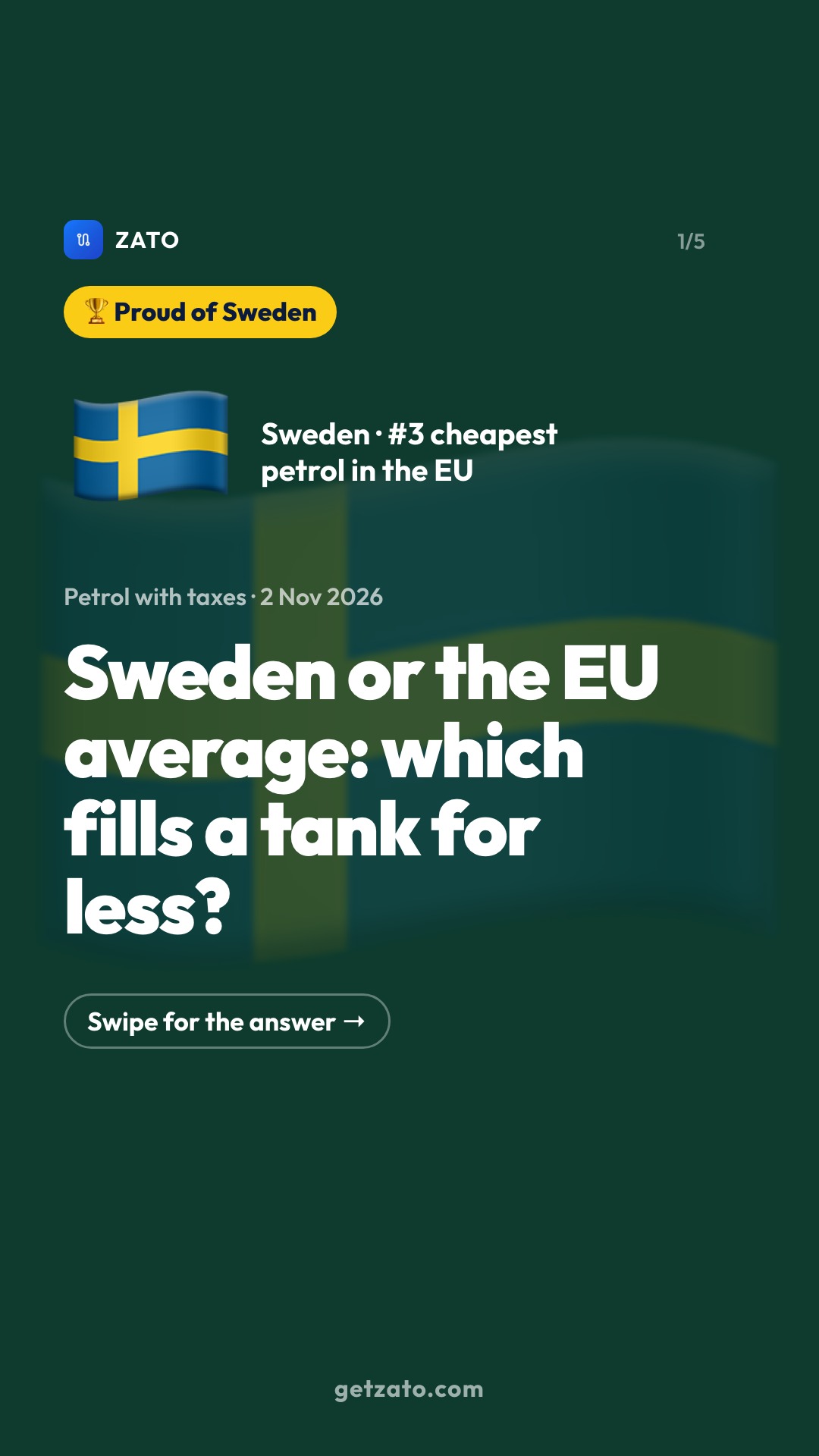
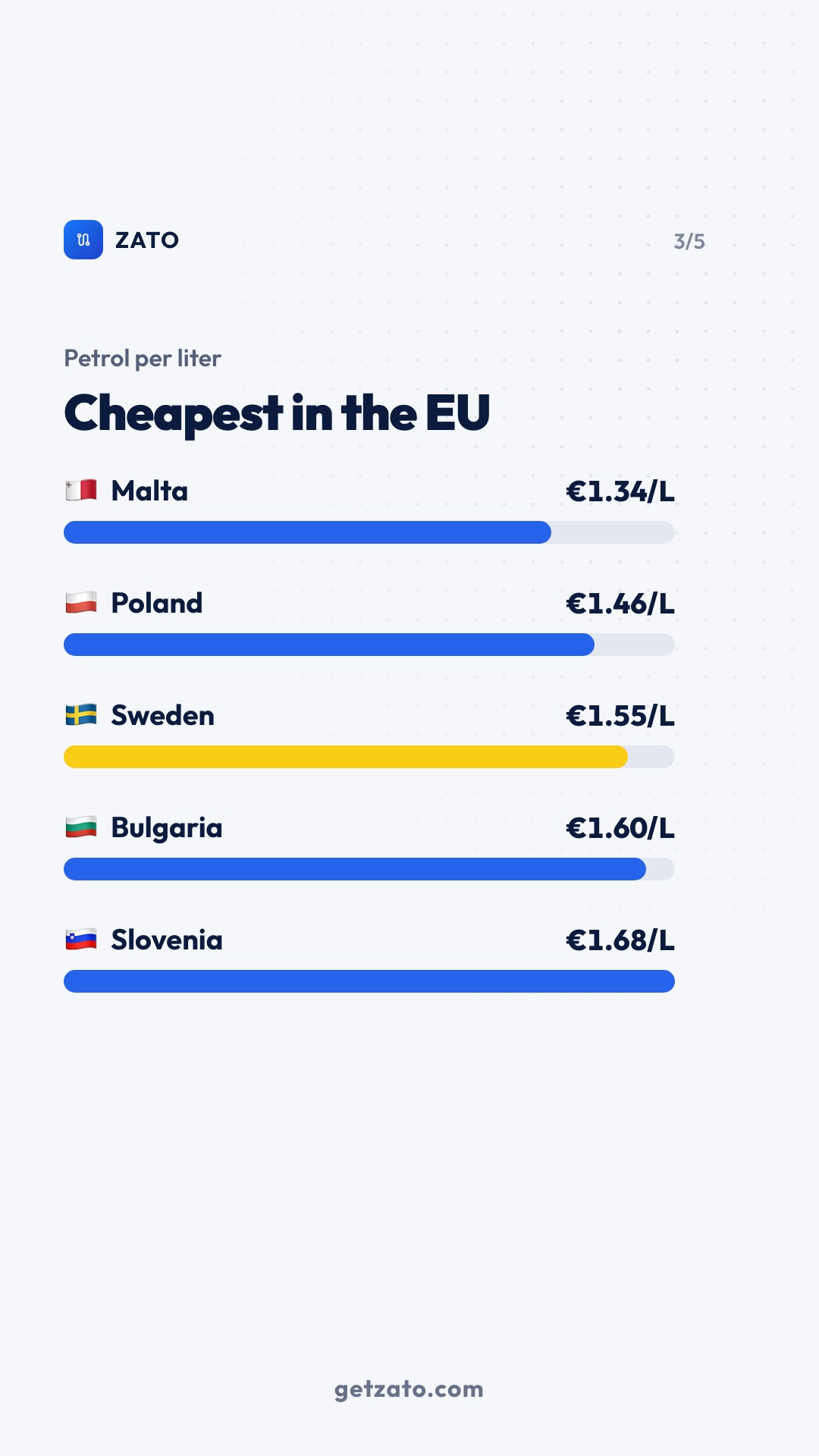
The EU Weekly Oil Bulletin lists petrol prices with taxes included. On 2026-11-02, Sweden was ranked 3 of 27 countries, where 1 is the cheapest.
That places Sweden near the low end of the EU list, but the EU average of €1.93/L is the benchmark used here. Sweden's €1.55/L sits below that average.
What it means for drivers
The easiest way to see the gap is per tank. On a 50 liter tank, a full fill costs €77.50 in Sweden and €96.50 at the EU average. The difference is €19.00.
If you drive a larger tank or fill up often, the gap adds up. Your own driving pattern decides how much that matters for you.
Country and car details
Finland is the only neighbor of Sweden with a price in this data set. Petrol there was €2.21 on the same date, which is higher than both Sweden and the EU average.
Fuel price is only one part of the cost of driving. Fuel use depends on the car, the road, and the driver. Official fuel consumption figures come from WLTP tests, which are lab data. Real-world use can differ from those figures, so check your own fuel records for an accurate picture.
How these numbers are calculated
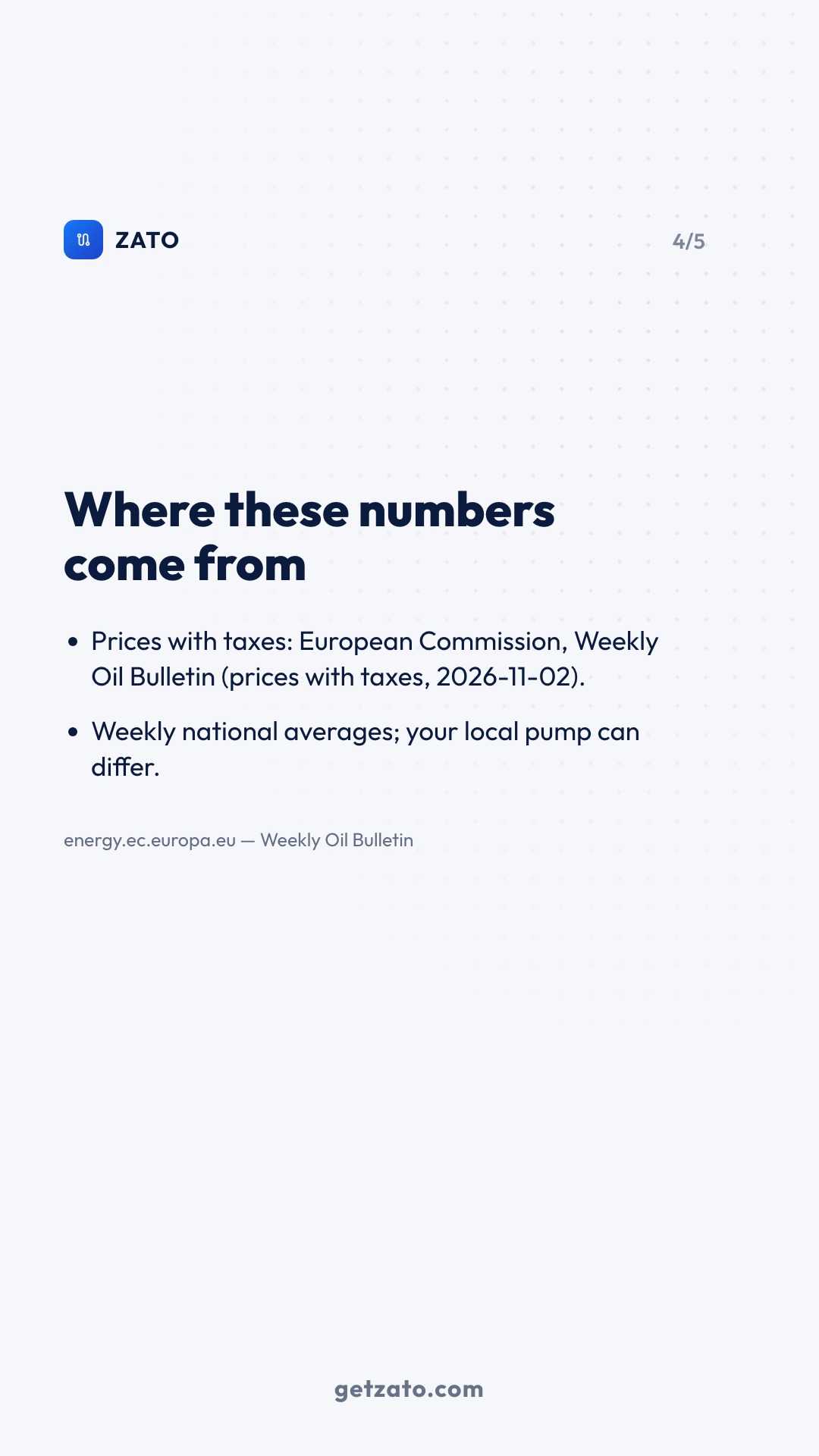
The prices come from the EU Weekly Oil Bulletin, an official weekly publication from the European Commission. The figures are for petrol with taxes included, and the date used here is 2026-11-02.
Because the bulletin reports prices on a set date, the figures show a snapshot, not a fixed price. Check the latest bulletin before comparing prices for a trip or a fill-up.
Questions drivers ask
How much does petrol cost in Sweden?
On 2026-11-02, petrol in Sweden cost €1.55/L with taxes, according to the EU Weekly Oil Bulletin.
Is petrol cheaper in Sweden than the EU average?
Yes. Sweden's €1.55/L was below the EU average of €1.93/L on the same date. Sweden was ranked 3 of 27, where 1 is the cheapest.
How much would a 50 liter tank cost in Sweden?
A 50 liter tank cost €77.50 in Sweden, compared with €96.50 at the EU average. That is €19.00 less in Sweden.
Sources
Prices are national weekly averages with taxes; your local pump can differ. Car consumption is the official WLTP figure — real driving usually uses more.