What the numbers say
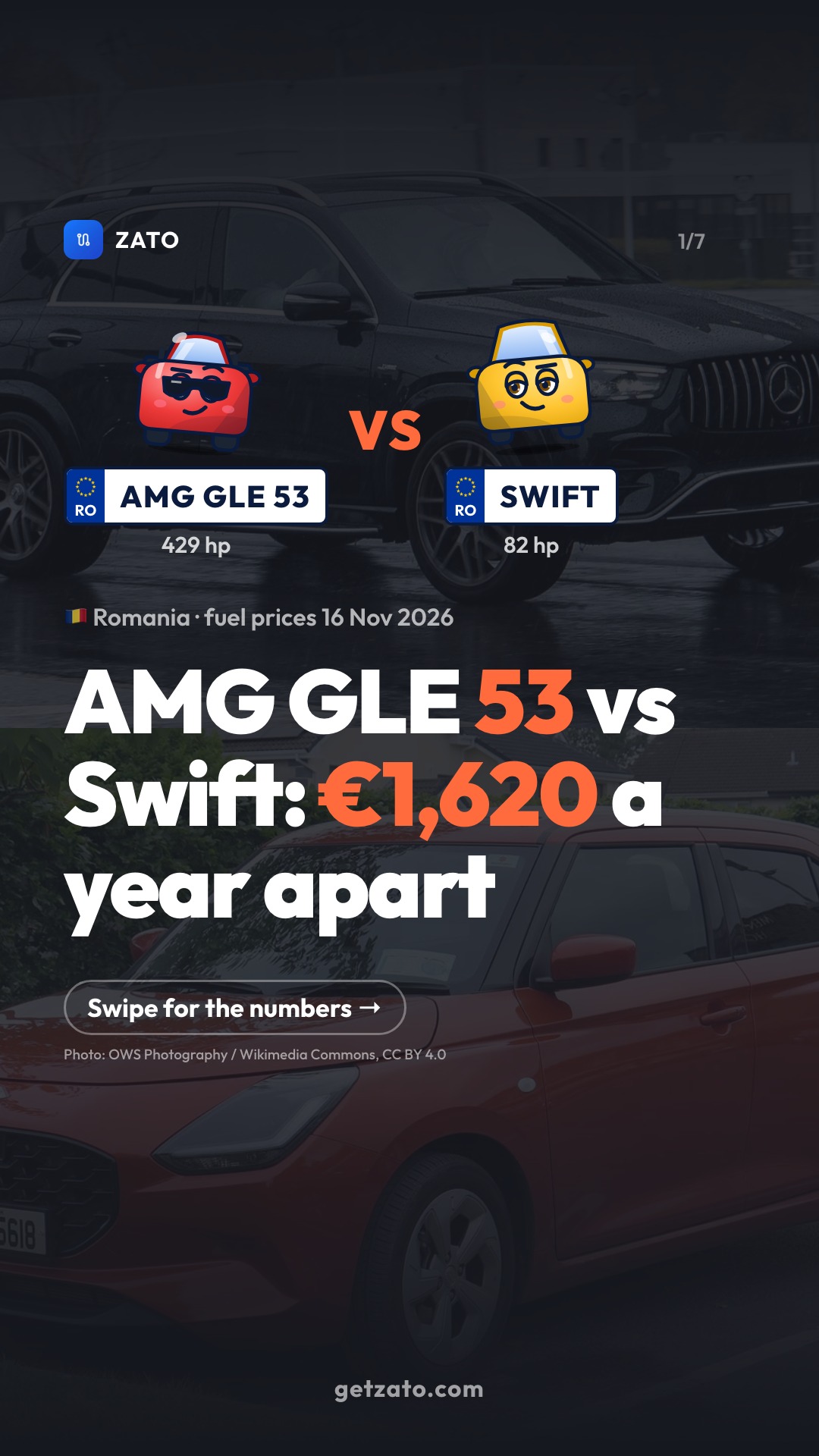
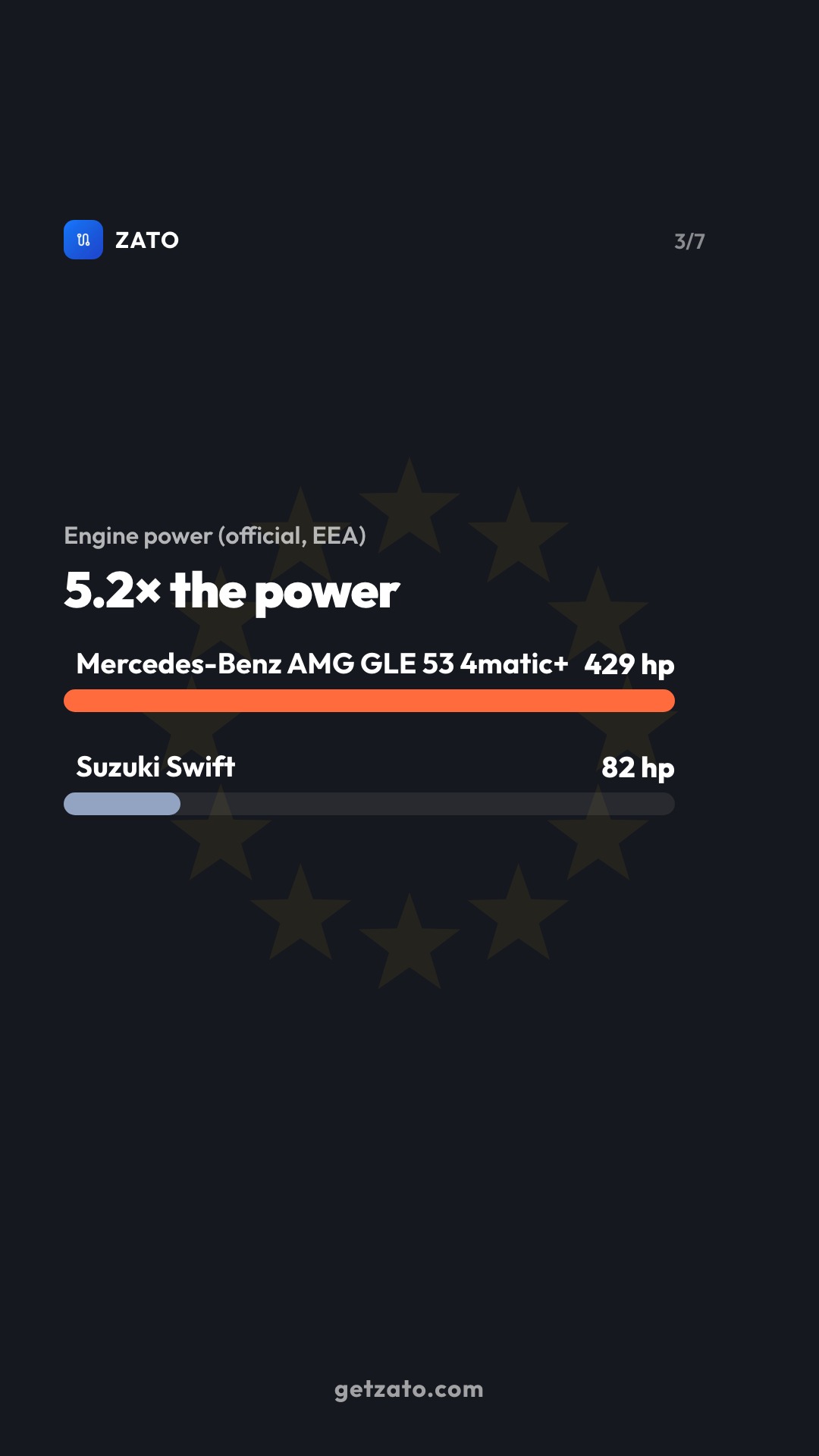
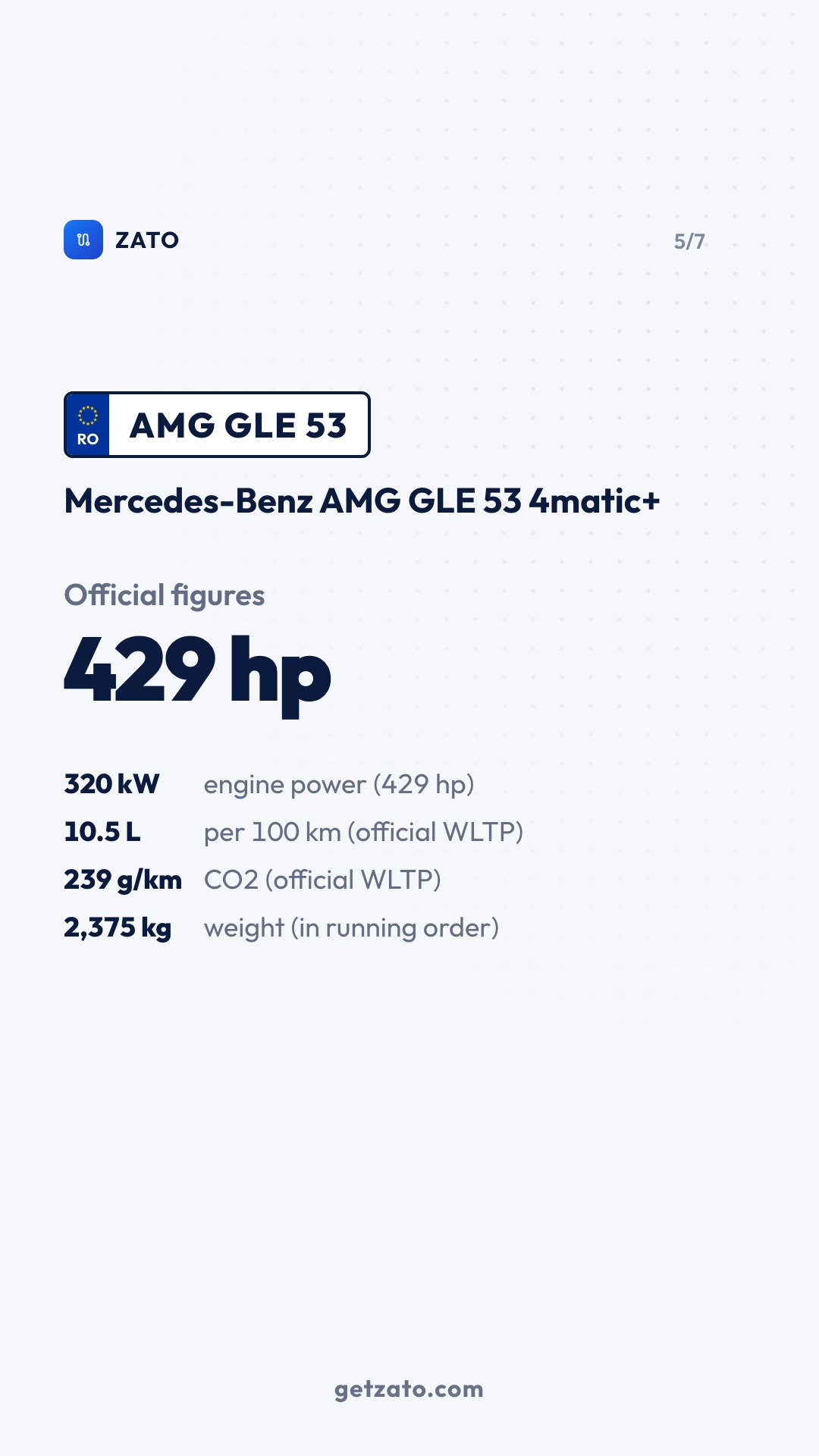
The AMG GLE 53 has 429 hp (320 kW). The Swift has 82 hp (61 kW). In the facts, the GLE 53 has 5.2× the power of the Swift and 2.4× the yearly fuel bill.
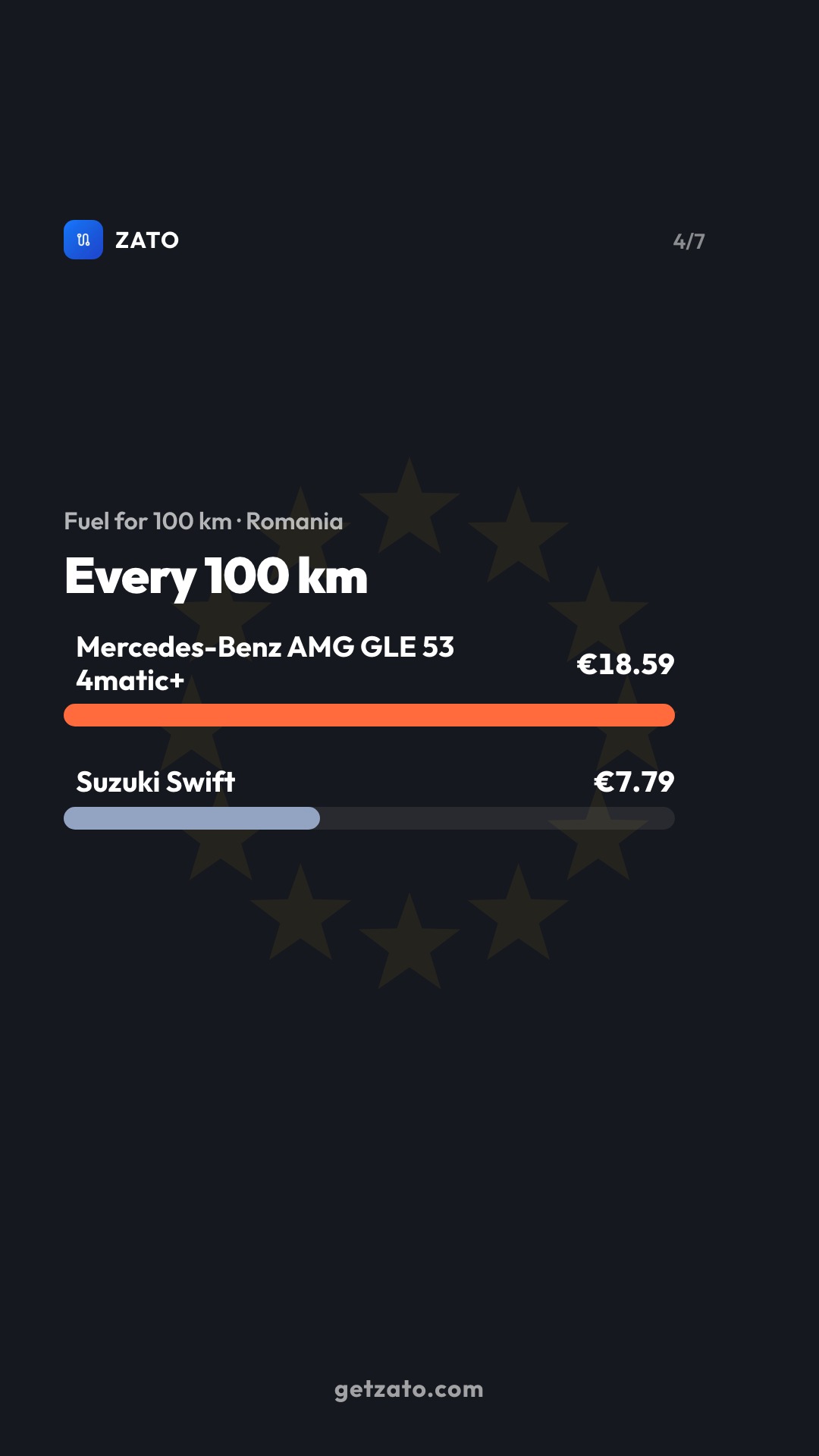
Per 100 km, the GLE 53 costs €18.59 in fuel and the Swift costs €7.79. Both use petrol priced at €1.77 per liter, so the gap comes from how much fuel each car burns, not from the price at the pump.
What it means for drivers
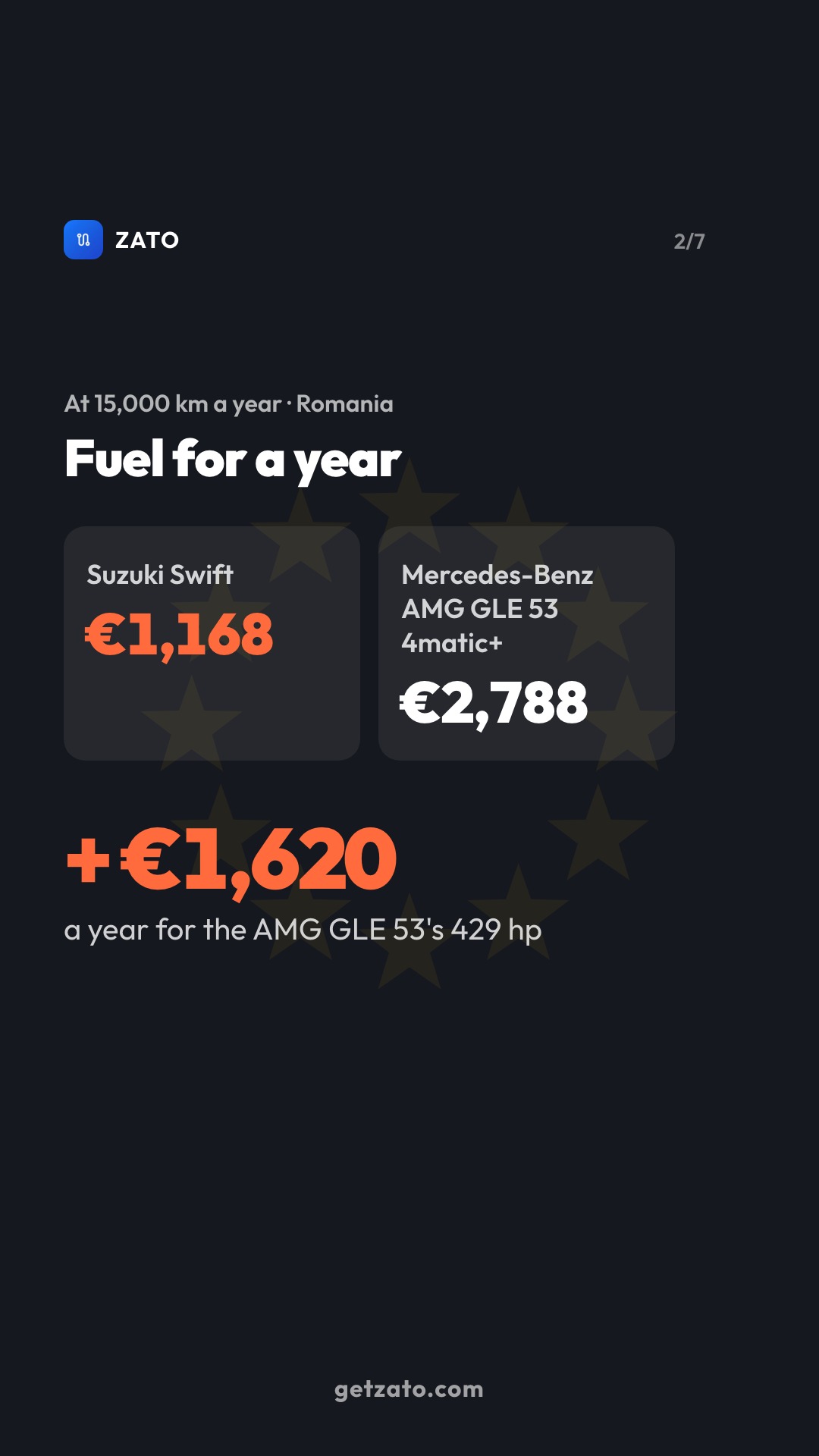
For a driver covering 15,000 km a year, the difference is €1,620 in fuel alone. Spread across a year, that is a cost you pay every time you fill the tank, whether or not you notice it.
Weight and power matter here too. The GLE 53 weighs 2,375 kg and the Swift weighs 994 kg. A heavier, more powerful car needs more energy to move, which is why its fuel bill is higher. If you are choosing between the two, compare the yearly figure against what you actually need from the car.
The two cars
The GLE 53 is a midsize luxury SUV with 4matic+ all-wheel drive and a hybrid system. Its official figures are 10.5 L/100 km and 239 g/km CO2.
The Swift is a small hatchback, also hybrid. Its official figures are 4.4 L/100 km and 99 g/km CO2. Both cars are compared here at the same petrol price in Romania.
How these figures are calculated
The fuel consumption figures come from the official WLTP test. WLTP is a laboratory test, run under set conditions. It gives a fair way to compare cars, but your own driving, road conditions, and climate can change the result.
The prices come from the EU Weekly Oil Bulletin, dated 2026-11-16. The yearly costs assume 15,000 km of driving. If you drive more or less, the yearly figure will change in proportion to your distance.
Questions drivers ask
How much more does an AMG GLE 53 cost in fuel than a Suzuki Swift in Romania?
At 15,000 km a year, the AMG GLE 53 4matic+ costs €2,788 in fuel and the Suzuki Swift costs €1,168. The difference is €1,620 a year.
What is the petrol price in Romania?
The petrol price is €1.77 per liter, from the EU Weekly Oil Bulletin, dated 2026-11-16.
Are WLTP fuel figures accurate for real driving?
WLTP is an official lab test, so it gives a standard way to compare cars. Real driving can use more or less fuel depending on how and where you drive.
Sources
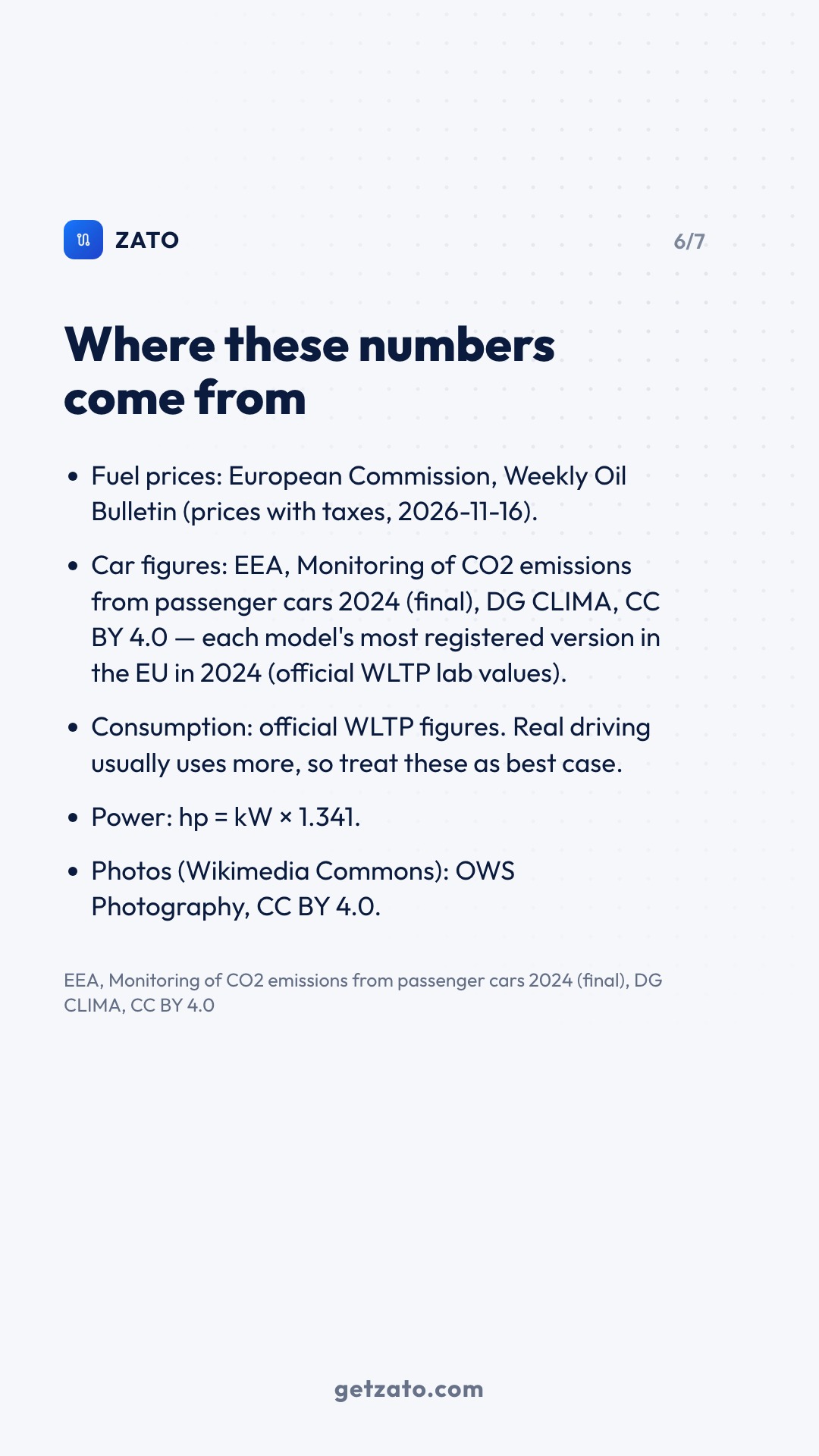
- European Commission, Weekly Oil Bulletin (prices with taxes, 2026-11-16)
- EEA, Monitoring of CO2 emissions from passenger cars 2024 (final), DG CLIMA, CC BY 4.0
Prices are national weekly averages with taxes; your local pump can differ. Car consumption is the official WLTP figure — real driving usually uses more.