
What the numbers say
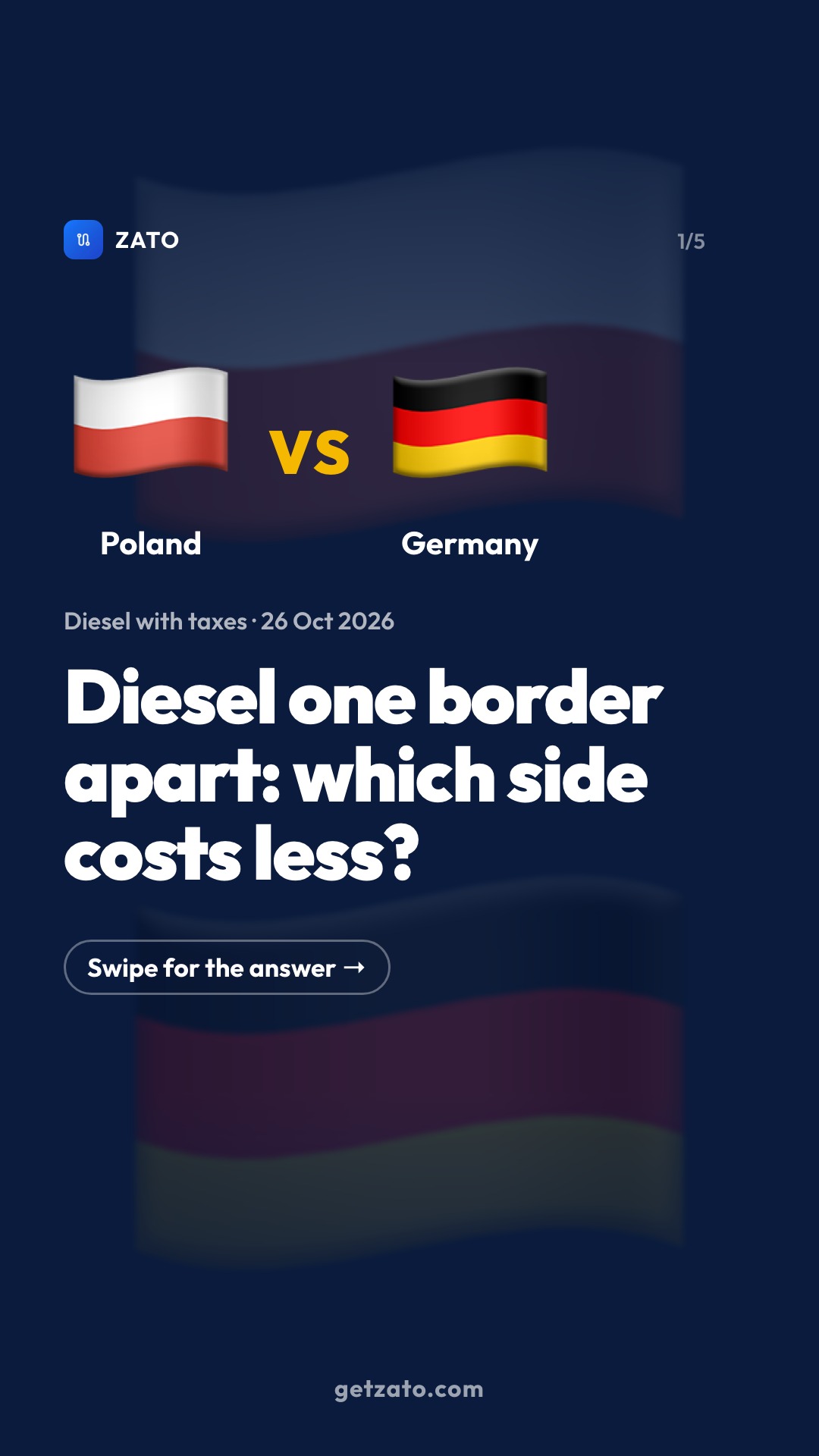
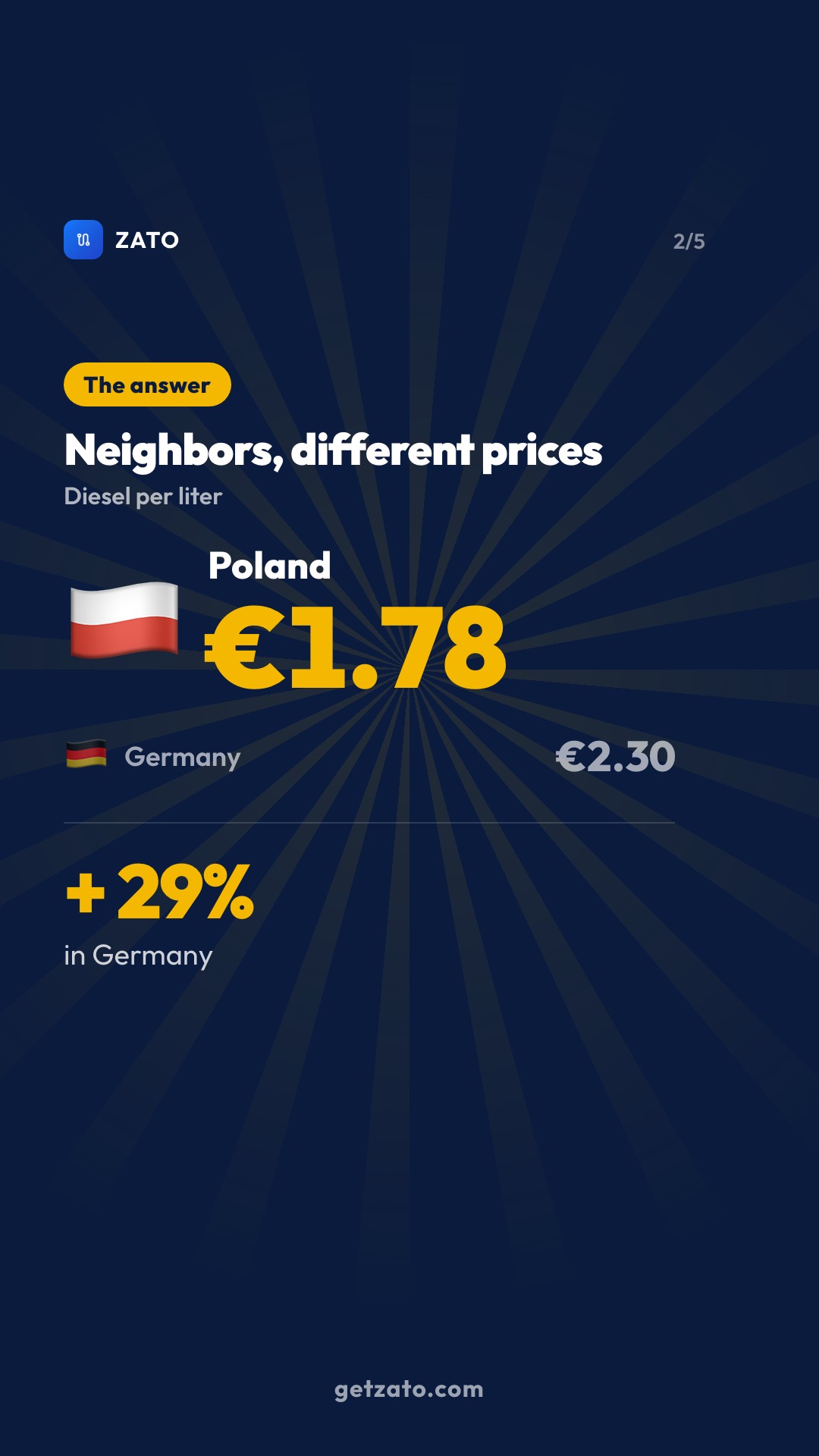
The EU Weekly Oil Bulletin lists diesel prices with taxes included. On 2026-10-26, the price was €1.78 per litre in Poland and €2.30 per litre in Germany.
Germany's price was about 29% higher than Poland's. The gap is large enough to matter for regular fill-ups, not just for the occasional tank.
What it means for drivers
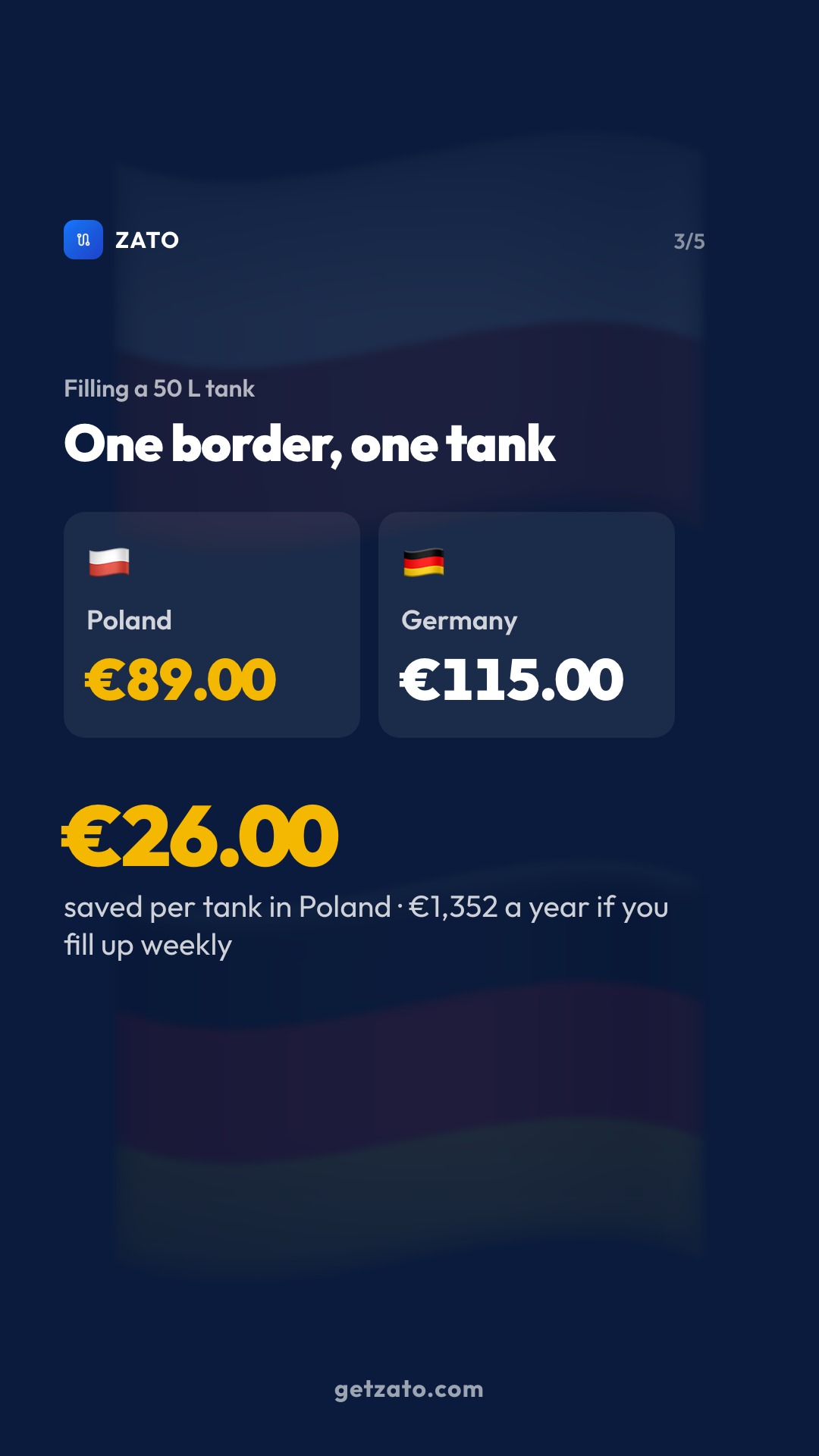
For a 50 L tank, the bill was €89.00 in Poland and €115.00 in Germany. The difference on one tank is €26.00.
Over a year of weekly fill-ups, which is 52 tanks, the same gap adds up to €1,352. For a driver who fills up regularly near the border, that is the number to weigh against the time and fuel needed to cross it.
Country and car details
These figures are pump prices for diesel, not a forecast. They show the price on one date, so the gap can change from week to week.
The tank examples use a 50 L fill. Your own cost depends on your tank size and how often you fill up. The yearly figure assumes 52 fill-ups at 50 L each.
How the figures are calculated
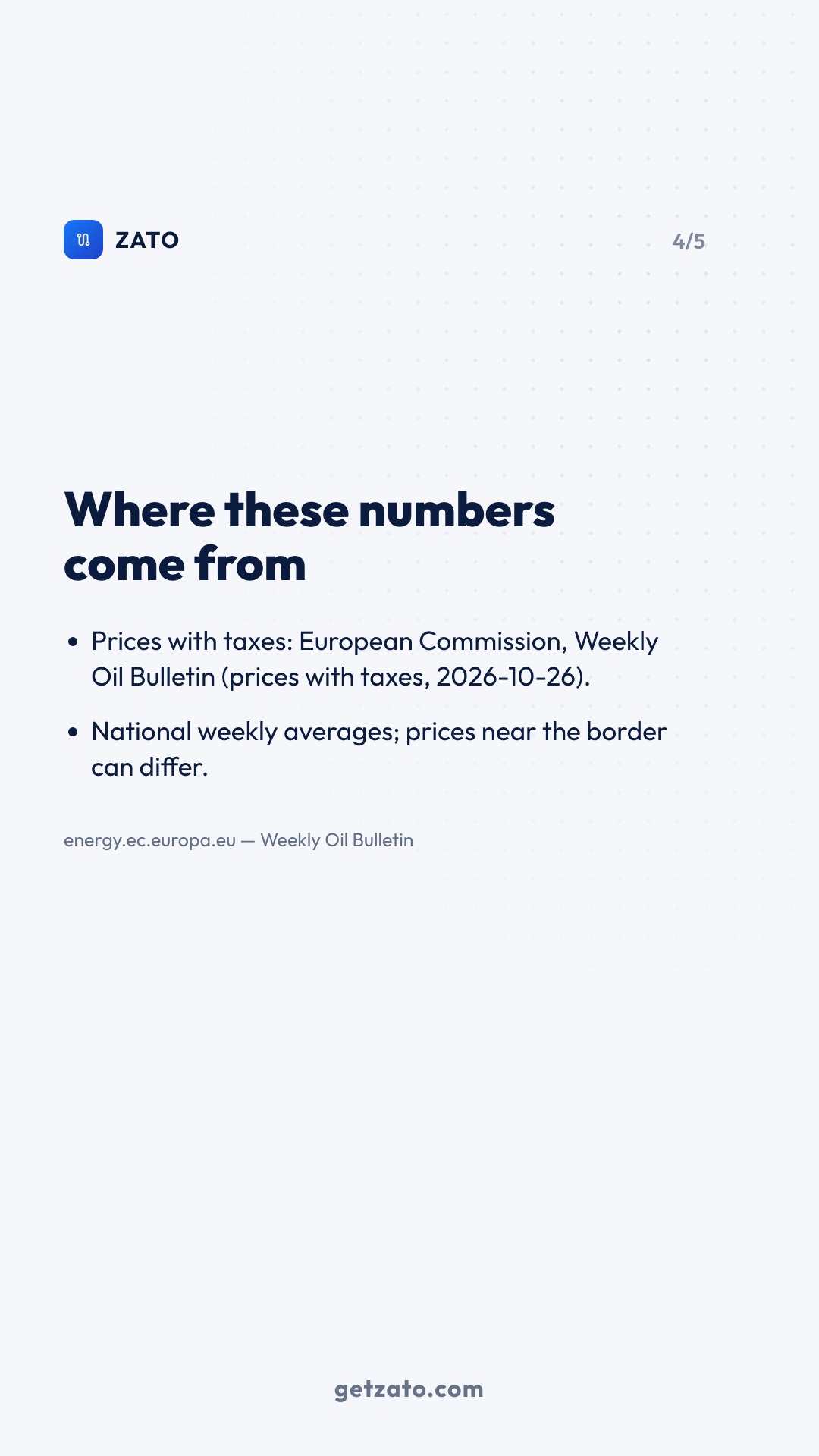
The prices come from the EU Weekly Oil Bulletin, an official EU publication. The bulletin reports prices with taxes, so the comparison is like for like across countries.
Fuel consumption figures for cars, such as WLTP values, come from laboratory tests. They are useful for comparing models, but real driving can differ. The cost figures in this article do not use them.
Questions drivers ask
How much is diesel in Poland and Germany?
On 2026-10-26, diesel with taxes was €1.78 per litre in Poland and €2.30 per litre in Germany, according to the EU Weekly Oil Bulletin.
How much can I save filling a 50 L tank in Poland instead of Germany?
For a 50 L tank, the bill was €89.00 in Poland and €115.00 in Germany. The difference is €26.00 per tank.
How much could cross-border diesel save over a year?
Over a year of weekly fill-ups, which is 52 tanks, the difference adds up to €1,352, based on the prices on 2026-10-26.
Sources
Prices are national weekly averages with taxes; your local pump can differ. Car consumption is the official WLTP figure — real driving usually uses more.